Overview


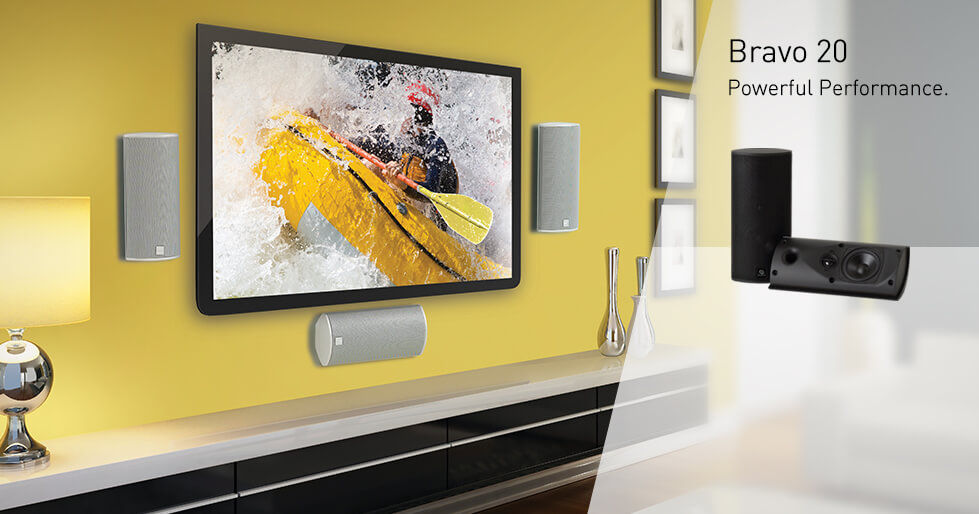
Owners are rightly dazzled by the picture quality of today’s flat-panel TVs, but
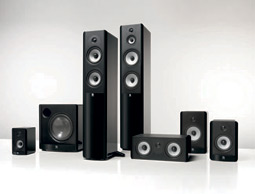
few have kind words for the sound of the built-in speakers. VS 224 LCR loudspeakers
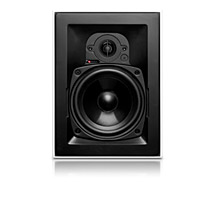
-- slim enough to be wall-mounted surrounding a flat-panel TV monitor -- are engineered
to bring any multichannel source material vividly to life. Dual high-performance
OCCM woofers and an SWB tweeter, integrated with premium crossover components, deliver
audio performance that’s a perfect complement to the video performance of your flat-panel
monitor, and their high-gloss, high-style design will add an elegant note to any
decor.
- Dual 4-1/2" (114mm) OCCM woofers
- 1" (25mm) SWB tweeter
- Elegant black lacquer piano finish cabinet
- High-gloss furniture-grade end panels in a choice of finishes
- MagnaGuard video shielding
- Gold-plated 5-way binding posts


Boston's Super Wide Bandwidth (SWB) High -Frequency Transducer Tweeter
This extraordinary new tweeter incorporates an array of features and technologies
that result in great transparency and micro dynamics with a low frequency extension
that ensures a full-bodied sound character at high output levels.
The SWB's Coupled Dual Concentric Diaphragm (CDCD)
The advantage of using the new Boston Acoustics CDCD diaphragm is that its center
is terminated to a brass plug that extends from the motor system. At high frequencies
(i.e. above 10-12 kHz) the center of a traditional dome shaped diaphragm is gradually
decoupled and begins to move out of phase with the remaining diaphragm structure
causing cancellation of higher frequencies and a loss of radiating surface area.
Terminating the center portion prevents this from happening and forces the diaphragm
to operate in a “bending wave” mode, which has significantly lower distortion and
no phase cancellations. In this way, the CDCD works more like a piston—and this
lowers the ”noise floor”. The larger surround ensures sufficient high frequency
radiation and improves dispersion. It also compensates for the loss of center diaphragm
area and lowers compliance. The layering of materials is used to make a composite
sandwich.

Organic Composite Cone Material (OCCM)
When selecting a high performance loudspeaker cone material for VS Series, the engineering
team at Boston Acoustics required the material’s performance qualities to meet our
highest standards. In order to acheive maximum performance, the VS Series loudspeaker
cone material needed to exhibit 3 principal qualities:
Lightweight - To achieve faster speed allowing for greater attack transient
response while maintaining good sensitivity
Rigid - To remain pistonic and minimize cone break-up even during higher
output
Highly-damped - To minimize resonances and provide un-colored accurate motion
throughout it’s specified band

The Organic Composite Cone Material or OCCM chosen for VS is a new lightweight,
strong, and well-damped cone material developed to have superior sound characteristics.
Through the use of select natural fibers making the material less uniform, it virtually
eliminates the inherent cone break up modes exhibited by many other common cone
materials, and provides VS with a cone platform for inherently accurate motion and
sound.
While OCCM cones are very light they are also very rigid because the random crossing
natural fibers strengthen the paper base material much like carbon fiber, but at
a lower weight. By using OCCM along with premium transducer components, such as
aluminum cast baskets and rubber surrounds, VS Series loudspeakers are able to achieve
increased output, improved accuracy, and a high level of reliabilty.

Cabinet Construction
The speaker enclosure plays a vital role in the sound reproduction chain. It provides
a foundation for the woofers to generate of high-level bass while remaining neutral
in acoustic color and adding none of its own character. The enclosure should not
flex or resonate and it should not allow standing wave buildup which could influence
the behavior of the speaker units. The enclosure should also be strong and stable,
offering rock solid anchoring for the higher frequency drivers so an accurate acoustic
image can result.
Most cabinets are made of man-made wood, which is inexpensive, relatively strong,
well damped, and easily machined and finished. It’s well known in the aviation industry,
that composite materials can benefit from their constituent components in a way
that exceeds the performance of each of them separately. Typically, composite materials
exhibit a much higher strength than any of the component materials, and they can
benefit from enhanced damping characteristics as the layers work against each other.
For this reason, we chose to make our VS Series loudspeaker cabinets from several
layers of dissimilar wood materials, sandwiched together in a high pressure curved
set of tools and cured with high frequency RF energy. The result is a stable curved
composite wood board material that can be further machined and assembled into a
loudspeaker enclosure.